CeraVe PM Facial Moisturizing Lotion: What the Ingredient List Tells You
Ingredient lists can look like a wall of unfamiliar words, but they tell you a lot once you know what to look for. CeraVe PM Facial Moisturizing Lotion makes a good example, because its list is short, clearly structured and easy to read.
A quick note on how this article was written: it is a product overview built from the manufacturer’s published product page, its ingredient list, and general skincare and makeup knowledge. It is not a record of hands-on testing, and the product photos are the brand’s own.
This article uses the PM lotion’s ingredient list as a worked example of how to read a label, along with what the brand says about the product itself.
What This Lotion Is

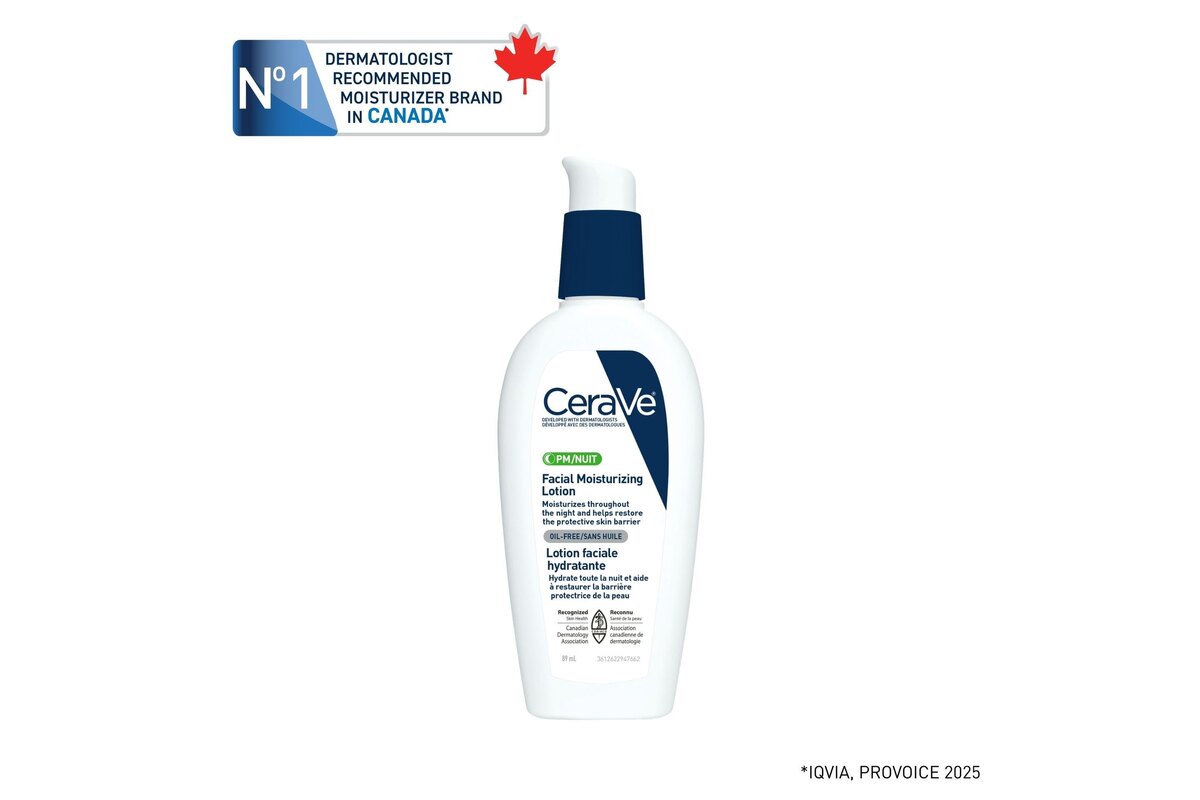
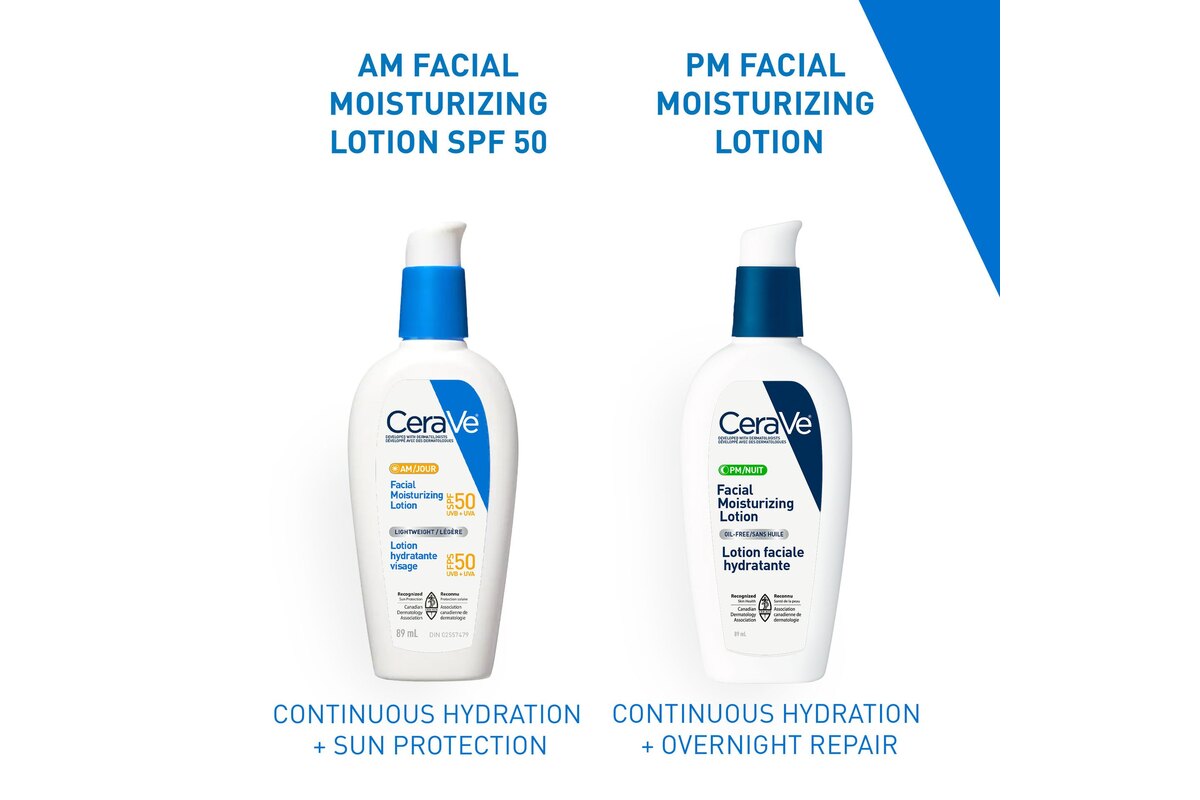
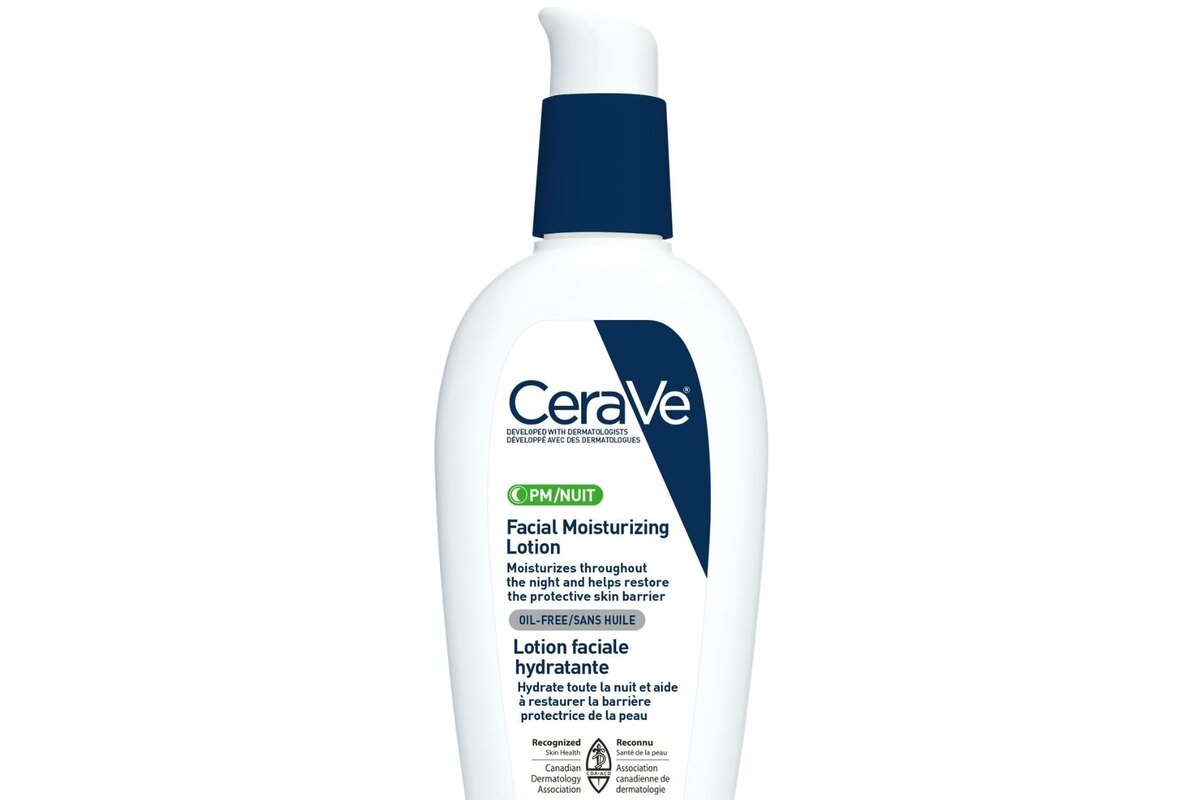
CeraVe describes PM Facial Moisturizing Lotion as a lightweight, oil-free night lotion. It is designed to soothe and hydrate skin while you sleep, although the brand says it has no actives that require nighttime use, so it can be used in the morning too. It does not contain sunscreen, so if you use it during the day, apply a separate sunscreen.
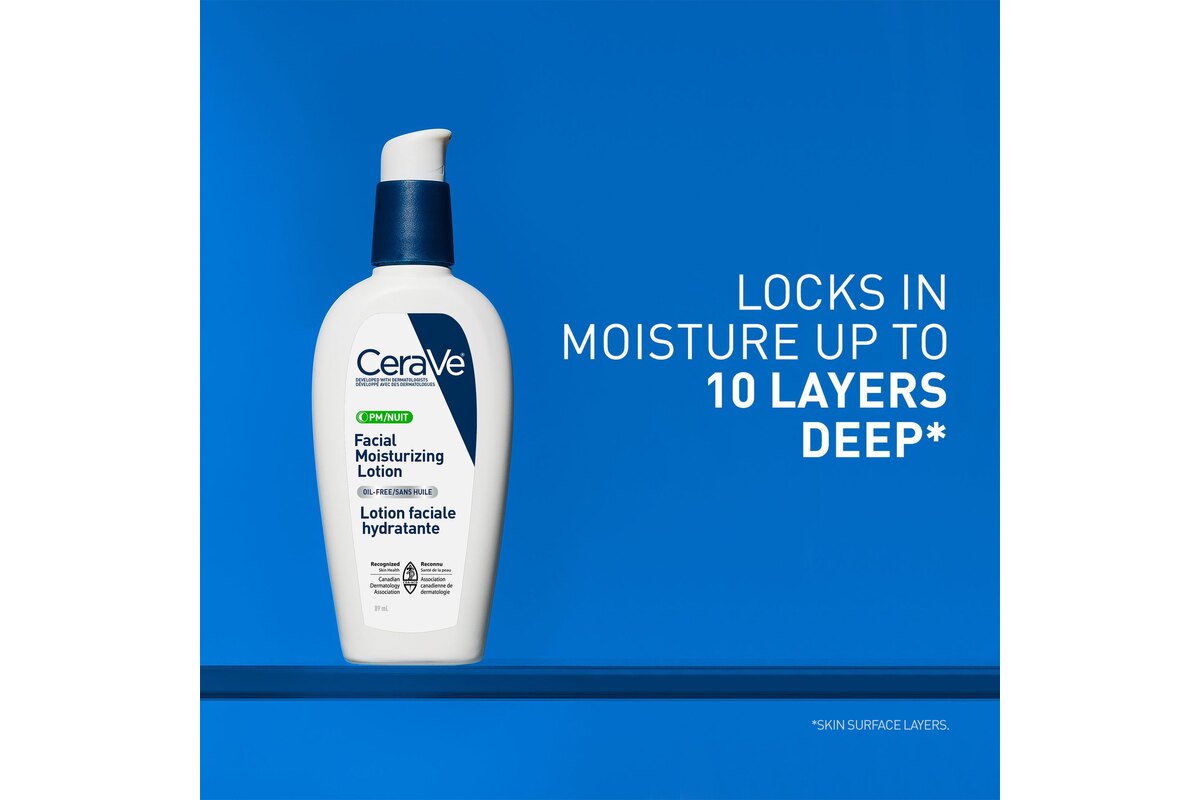
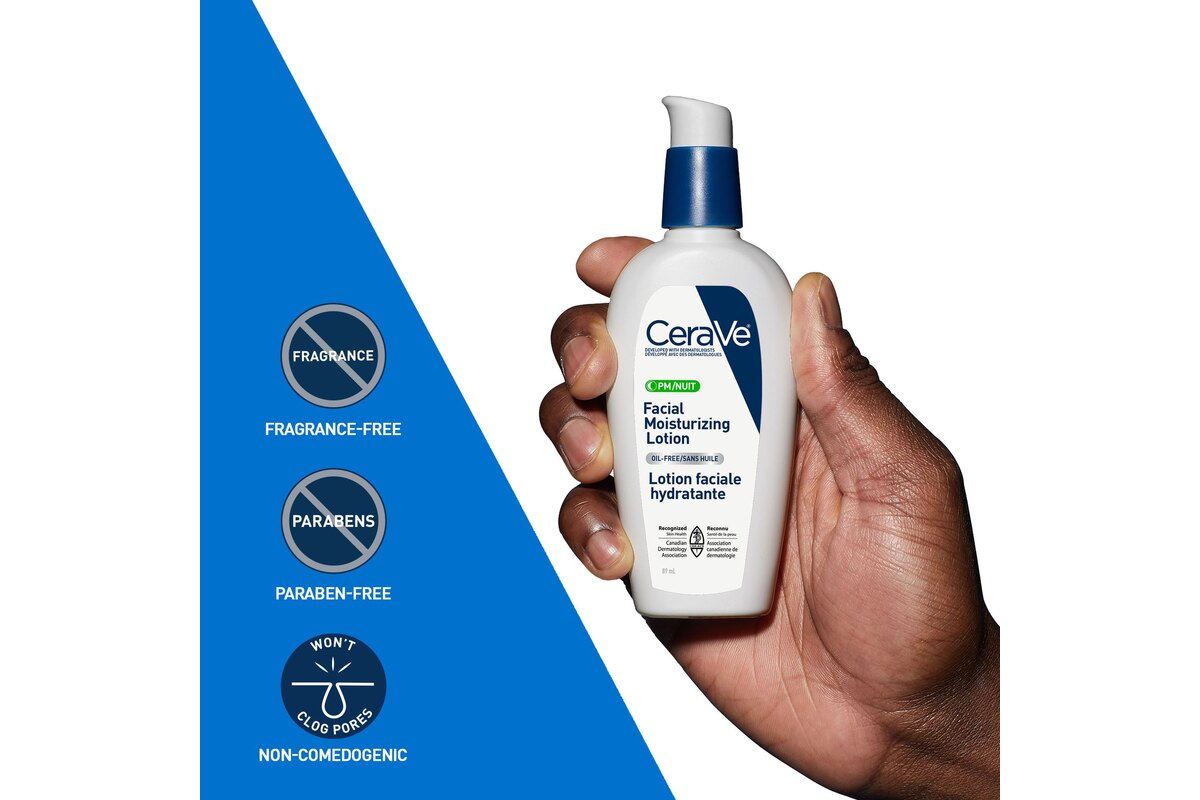
It comes in a pump bottle in 59 ml and 89 ml sizes. The brand says it is non-comedogenic, hypoallergenic, oil-free, fragrance-free and non-irritating, and that it hydrates for 48 hours. These are manufacturer claims.
Reading the First Ingredients
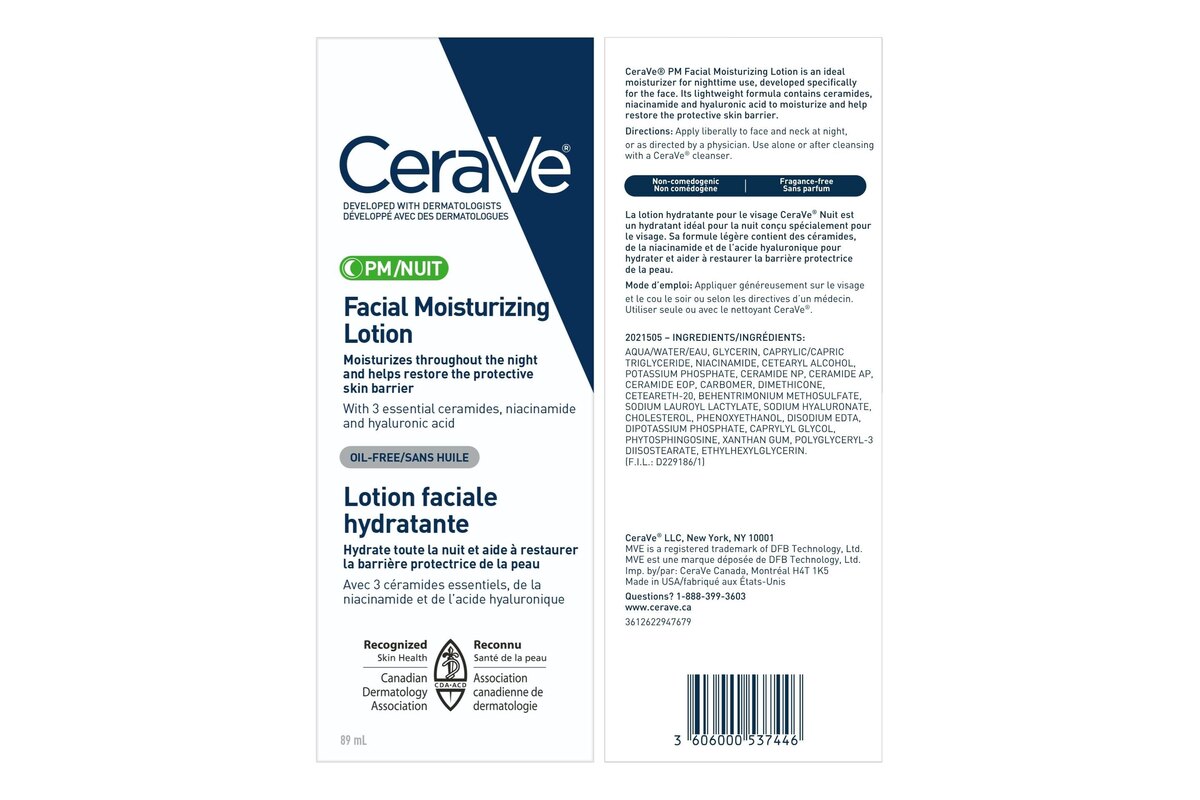
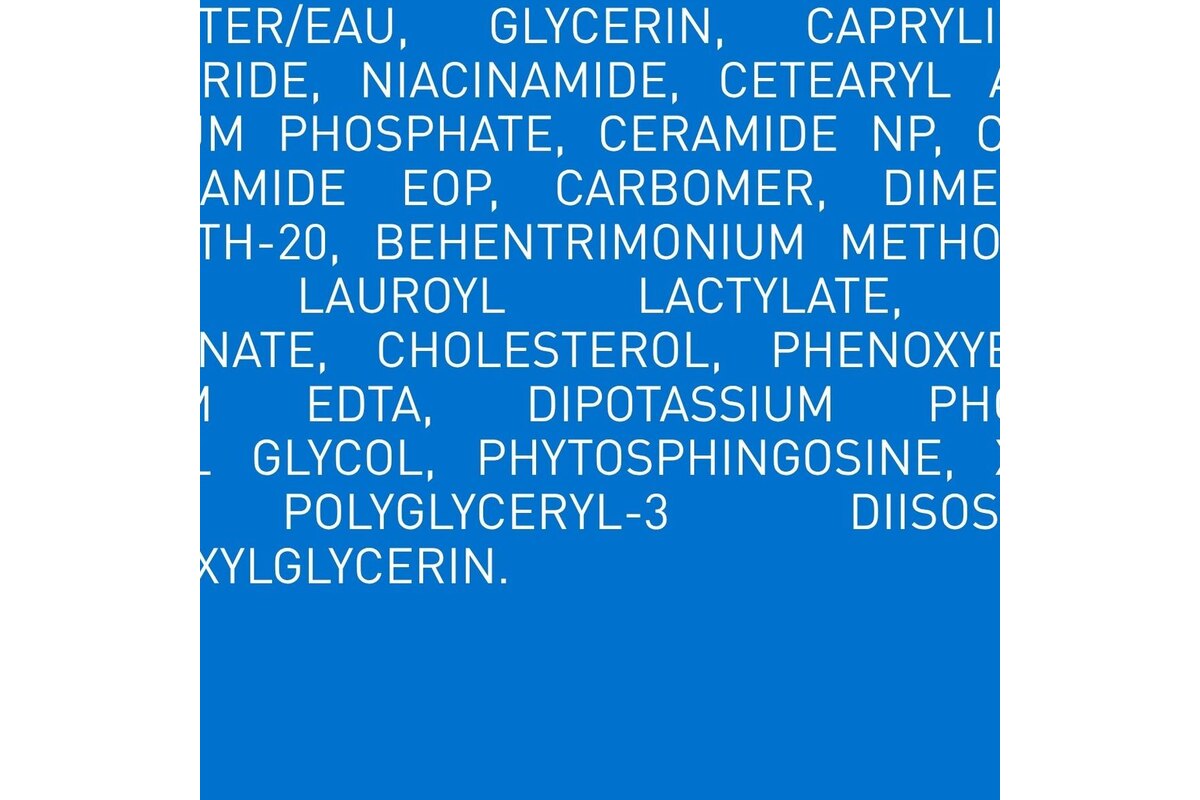
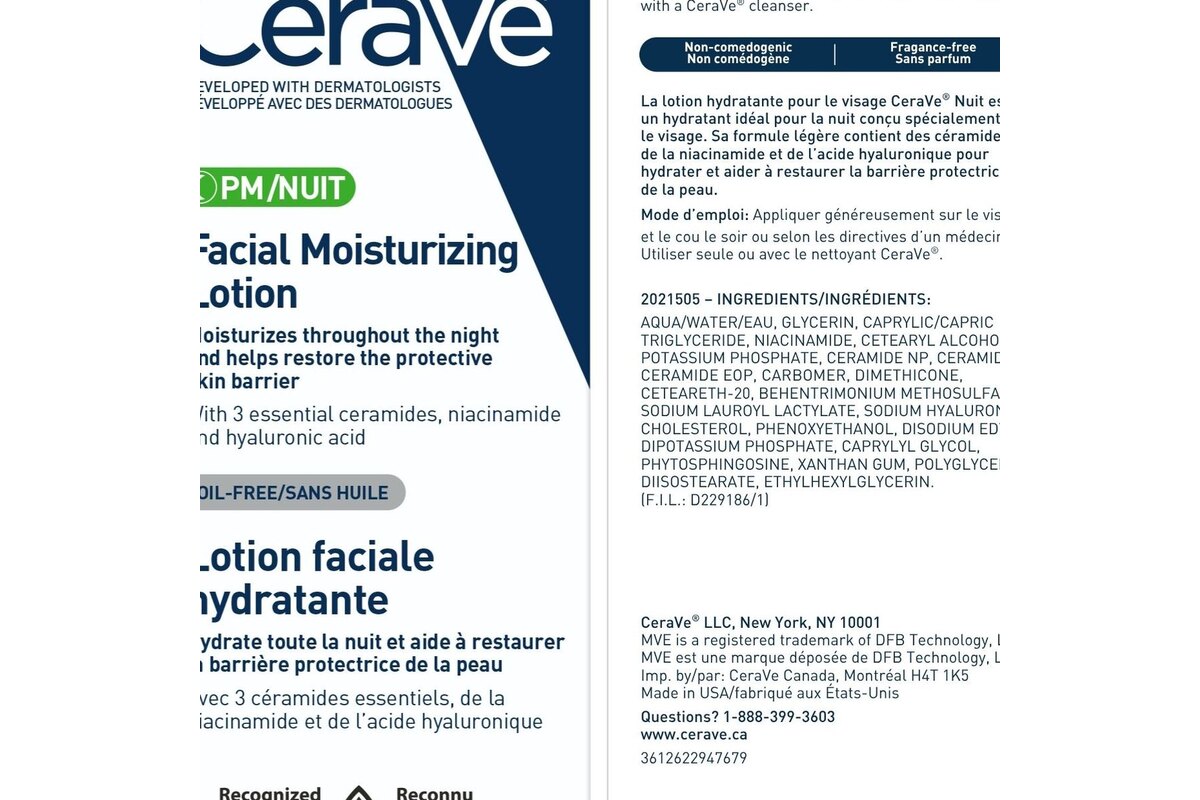
The list begins with water, glycerin and caprylic/capric triglyceride, followed by niacinamide, cetearyl alcohol and potassium phosphate. Ingredients are listed in descending order of concentration, so the first few make up most of the formula.
Water is the base, glycerin is a humectant that attracts water to the skin, caprylic/capric triglyceride is a lightweight emollient that softens the skin, and cetearyl alcohol is a fatty alcohol that gives the lotion body. Fatty alcohols are different from drying alcohols, which is a common source of confusion.
The Active Ingredients
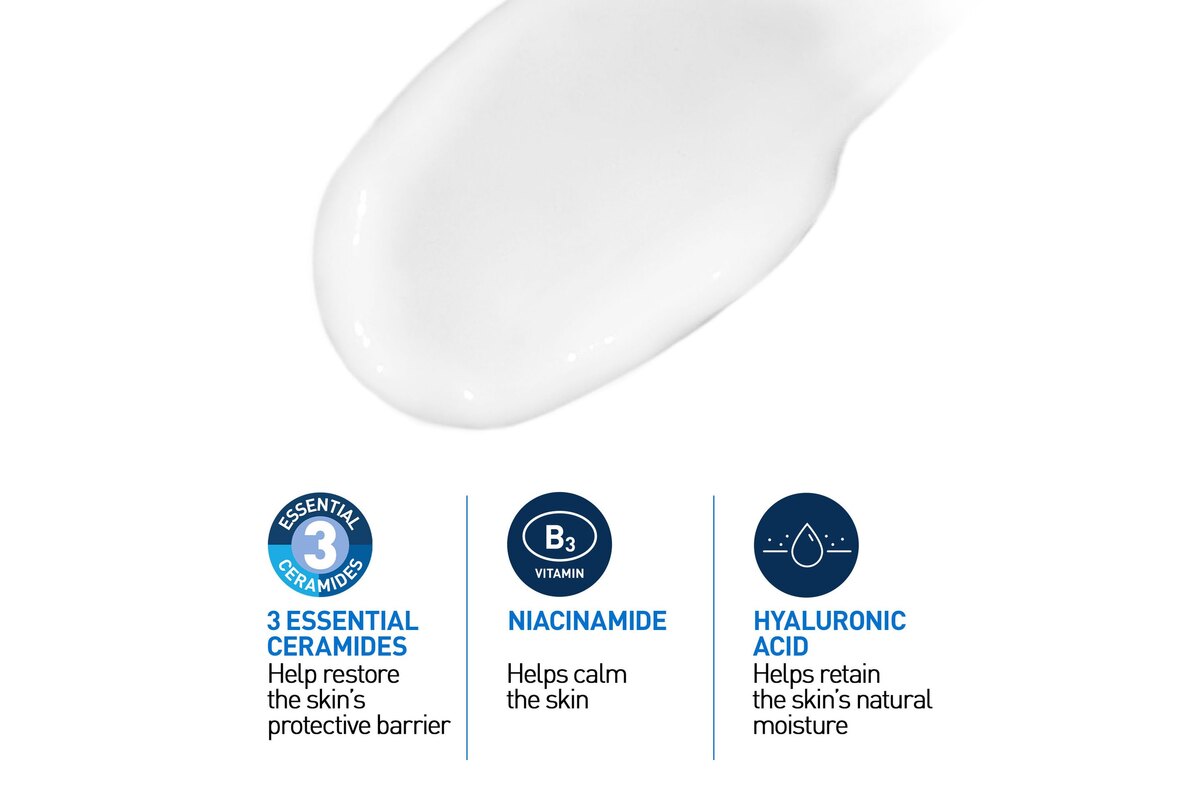
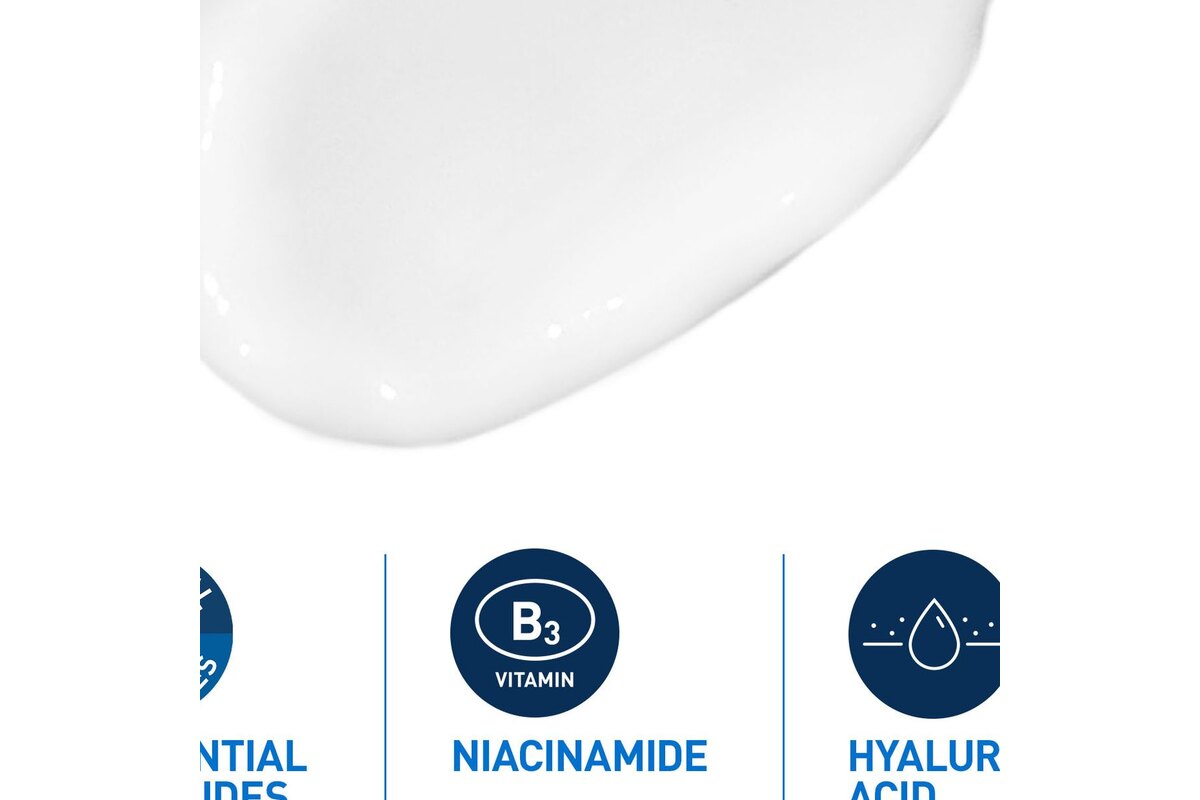
Niacinamide is a form of vitamin B3 that the brand says helps calm skin. It is also widely used for oil control and uneven tone. Because it appears near the top of the list, it is present in a meaningful amount, although the brand does not publish the percentage.
Ceramide NP, AP and EOP, together with cholesterol and phytosphingosine, are lipids found in the skin barrier. Sodium hyaluronate, the salt form of hyaluronic acid, helps skin hold on to water. Together they are the barrier-supporting core of the formula.
The Supporting Cast
Ingredients such as cetereth-20, behentrimonium methosulfate and sodium lauroyl lactylate help the oil and water phases mix into a stable lotion. Xanthan gum thickens it. Polyglyceryl-3 diisostearate helps with texture.
Preservatives such as phenoxyethanol, caprylyl glycol and ethylhexylglycerin keep bacteria and mould out of a water-based product. Disodium EDTA stabilises the formula. Preservatives are a necessary part of water-containing products and their presence is not a red flag.
Who It May Suit
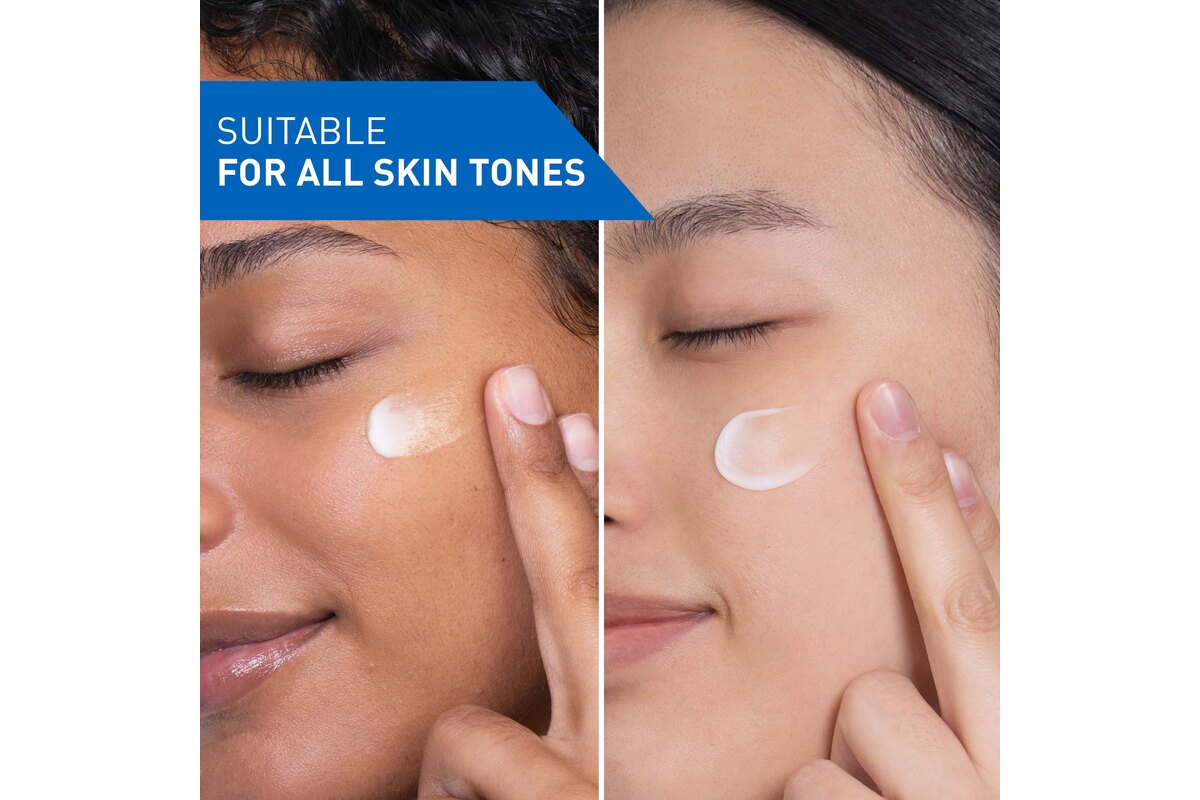
The brand describes it as suitable for all skin types, including sensitive skin, and as lightweight enough to avoid a greasy feel. People with oily or combination skin sometimes prefer a lotion to a cream for exactly that reason.
If your skin is very dry, a richer cream may suit you better. If you are unsure, start with a small bottle and see how your skin feels after a week.
How to Use It
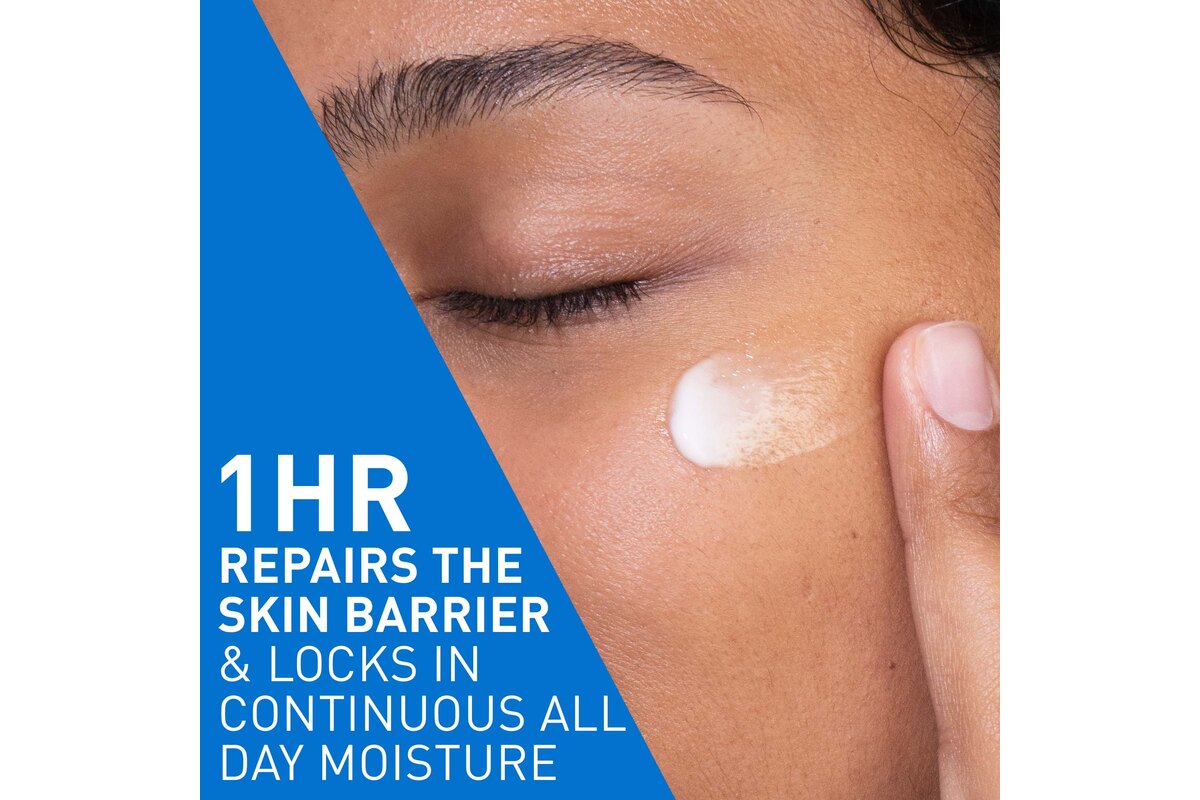
The label says to unlock the pump by twisting it to the left and pressing down several times until the product comes out. Apply liberally to the face and neck at night. You can use it in the morning too, but add sunscreen.
Apply it after cleansing and any serums or treatments. If you use a retinoid at night, you can use this lotion on top to buffer irritation.
What the Images Show
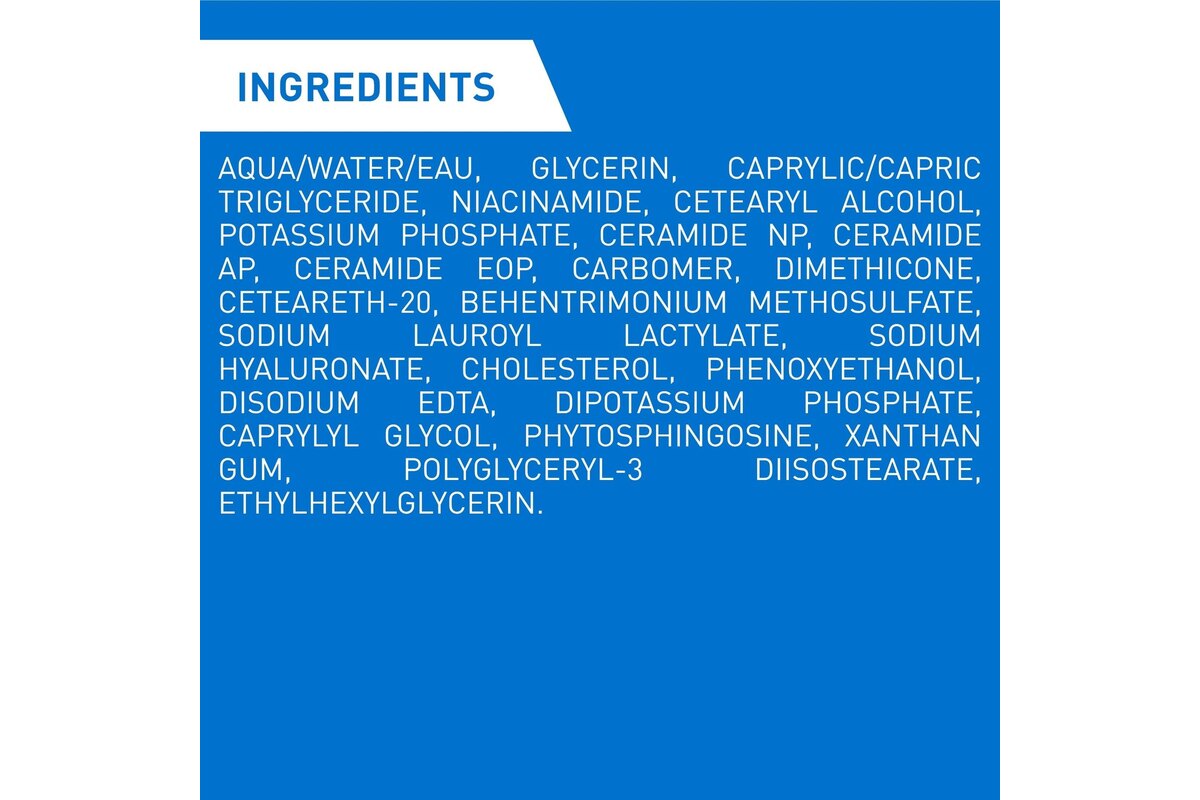
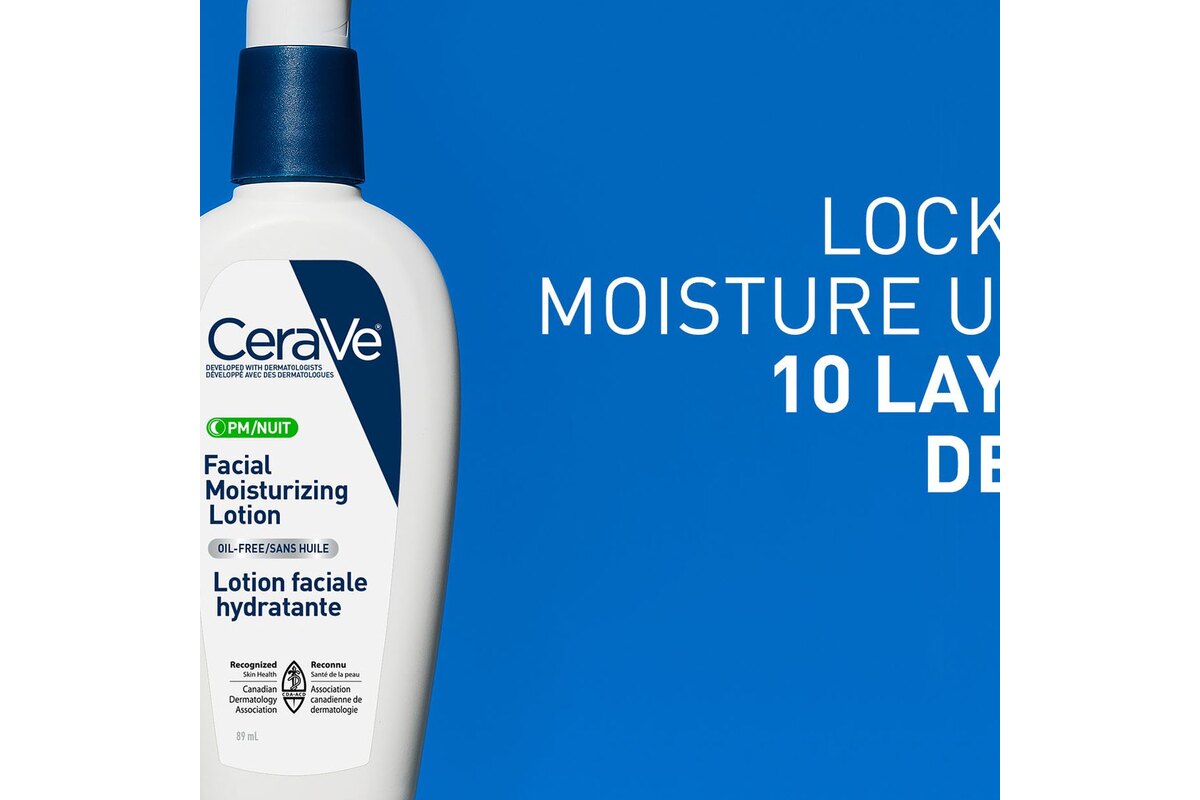
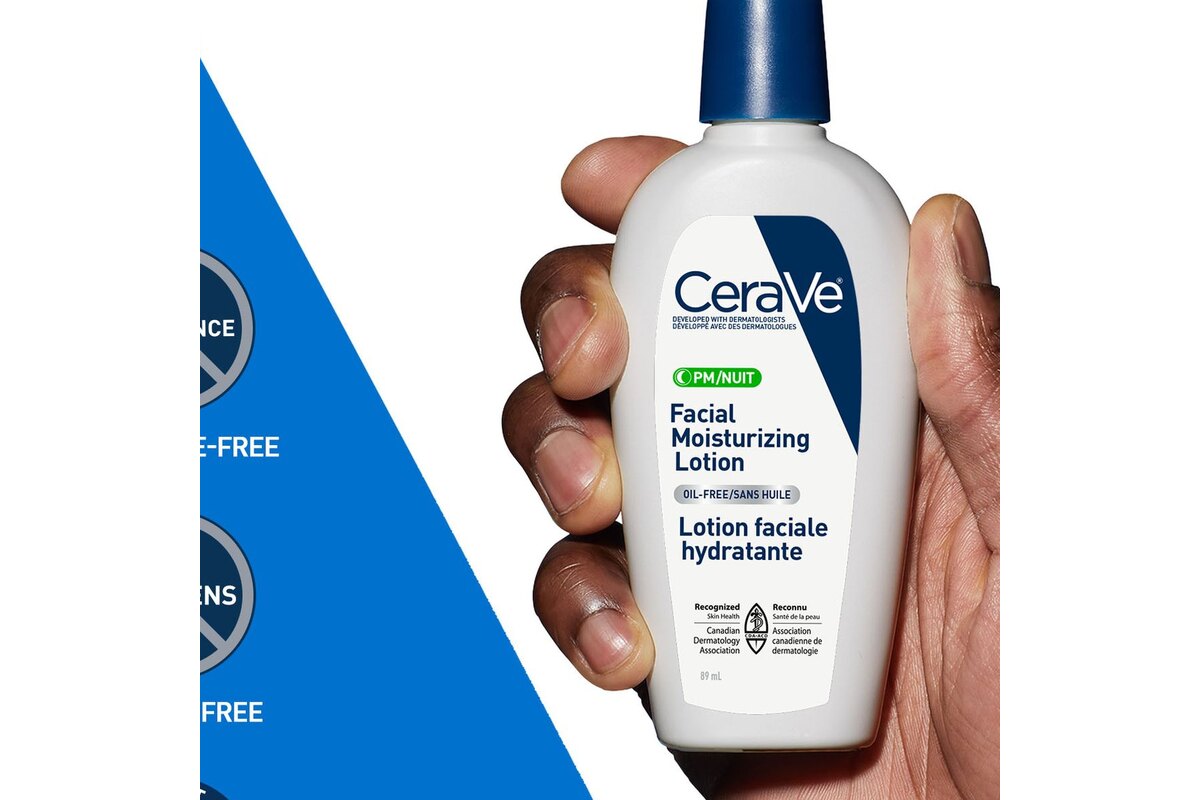
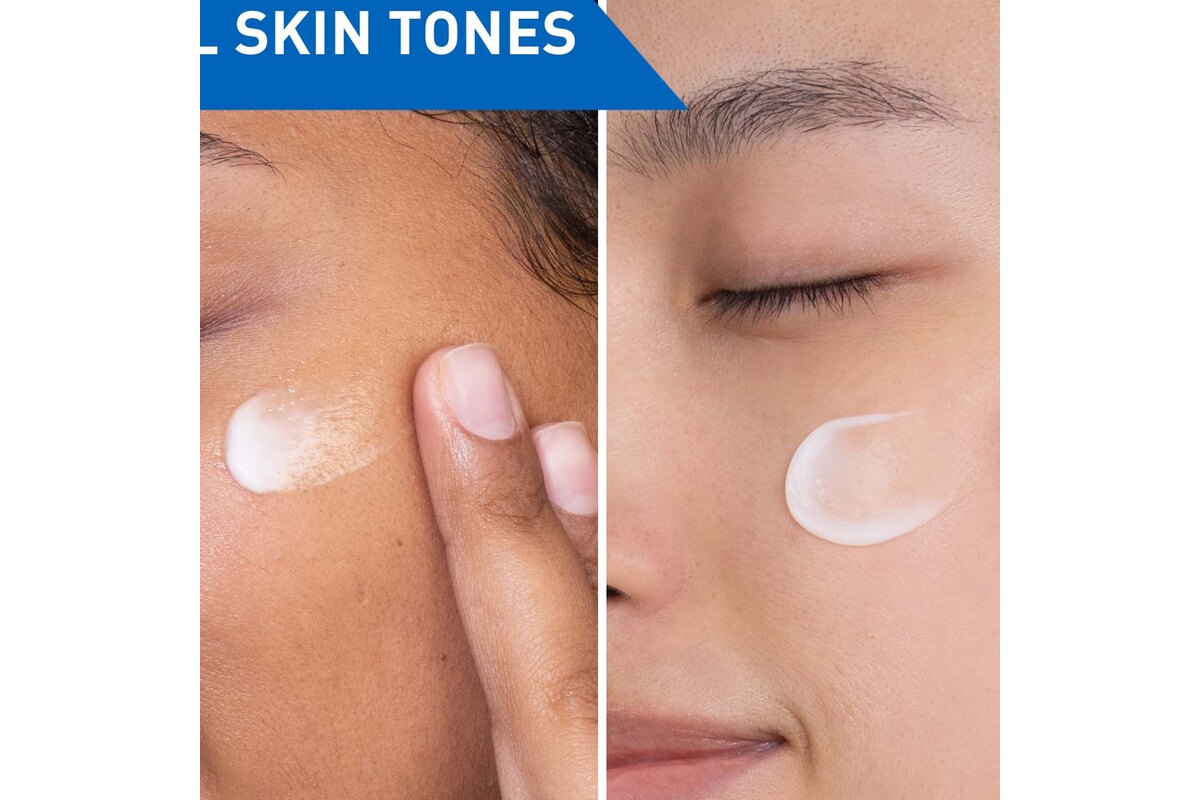
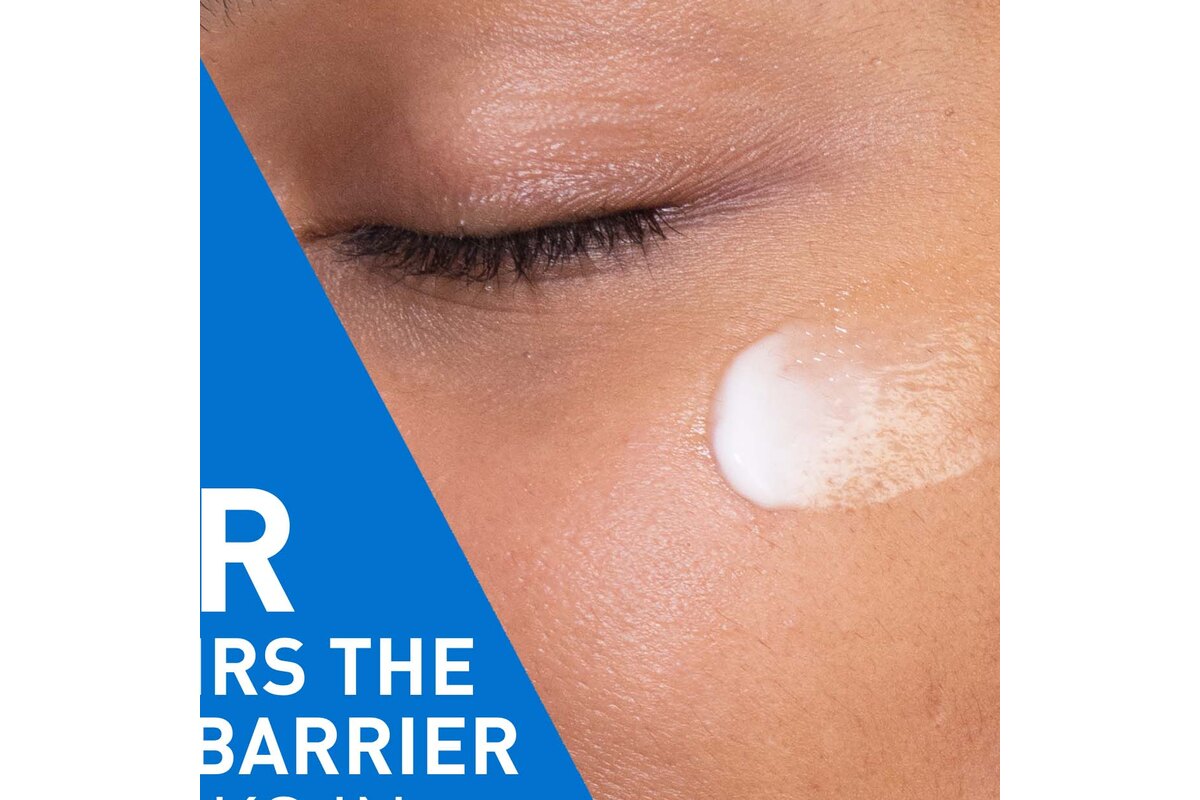
The images in this article come from the manufacturer’s product page. They show the pump bottle, a swatch of the lotion, people applying it, the back-of-pack ingredient list, and graphics for niacinamide, ceramides and hyaluronic acid.
They are marketing images, so use them to see the packaging and what the brand highlights. The ingredient list image is a handy reference to compare against your own bottle.
How to Read an Ingredient List Without a Chemistry Degree
Ingredients are listed in descending order by concentration, down to about one percent. After that, they can be listed in any order. So the first five or so ingredients make up the bulk of the formula, and the ingredient highlighted on the front of the box might be far down the list.
Ingredients are listed using standardized INCI names, which is why water appears as aqua and vitamin E as tocopherol. A quick search will translate most of them.
Do Not Fear Every Long Word
A long chemical name is not automatically bad, and a natural-sounding name is not automatically safe. Essential oils and some plant extracts can be irritants, while many lab-made ingredients are gentle and well tested. Judge ingredients on evidence, not on how they sound.
If your skin is reactive, look out for fragrance, parfum, and essential oils. Keep a note of products that irritate you and compare their lists to find patterns.
Reading Ingredient Lists for Specific Goals
If you want to hydrate, look for humectants like glycerin and hyaluronic acid, along with emollients and ceramides. If you want to calm redness, look for soothing ingredients such as panthenol, allantoin, and centella asiatica. If you want to treat breakouts, look for salicylic acid, benzoyl peroxide, or adapalene.
If you are targeting dark spots, look for vitamin C, niacinamide, azelaic acid, or tranexamic acid. For anti-ageing, retinoids, peptides, and antioxidants are the most commonly studied. Remember that sunscreen remains the most important ingredient for all of these goals.
Matching your goal to a short list of ingredients simplifies shopping. Instead of comparing dozens of products, you can look for the few that include what you need and skip those that do not.
Practical Examples

Imagine a moisturizer that lists water, glycerin, dimethicone, niacinamide, and shea butter among its first ingredients. That tells you the formula is water-based, with humectants, a silicone for smoothness, an ingredient for oil control and tone, and an emollient. You can tell that it is likely to be lightweight and hydrating.
Now imagine a serum that advertises vitamin C but lists it near the end of the ingredients. That suggests it contains only a small amount. By contrast, a product that lists ascorbic acid near the top may be more concentrated, though it may also be more irritating. Reading the list in context gives you a better sense of what you are buying.
Common Ingredient Myths
One myth is that chemicals are bad and natural is good. Everything is made of chemicals, including water, and many natural ingredients can irritate. Safety depends on the ingredient, the dose, and your skin, not on whether it is natural or synthetic.
Another myth is that long ingredient lists mean a product is worse. Many ingredients in a formula play small supporting roles such as stabilizing, preserving, or improving texture. A shorter list is not automatically better.
A third myth is that expensive products have better ingredients. Price often reflects branding, packaging, and marketing. Compare ingredient lists and reviews rather than assuming that cost equals quality.
Why Formulation Matters as Much as Ingredients
Two products can list similar ingredients and perform very differently. The way ingredients are combined, their concentration, the pH, and the type of delivery system all affect how well they work and how they feel on the skin. This is why an expensive ingredient does not guarantee a good product.
It is also why you should treat ingredient lists as a guide rather than a verdict. Your own experience of how a product feels and performs is the most important evidence. If a product works for you and does not irritate, the ingredient list is simply a useful way of understanding why.
Ingredients Worth Knowing
Hyaluronic acid holds water and helps plump the skin’s surface. Ceramides are lipids that help repair the barrier. Niacinamide is a form of vitamin B3 that can improve oil control and uneven tone. Vitamin C, often listed as ascorbic acid, is an antioxidant that can brighten skin.
Glycolic and lactic acids are alpha hydroxy acids that exfoliate the surface. Salicylic acid is a beta hydroxy acid that works inside pores. Zinc oxide and titanium dioxide are mineral sunscreen filters. Learning a short list like this helps you see what a product is trying to do.
A Quick Checklist Before You Buy
Before you buy a new product, run through a short checklist. Check the first five ingredients to see what the formula is mostly made of. Look for the key active you want. Scan for anything you know irritates your skin. Check the packaging and whether it protects sensitive ingredients from light and air.
Finally, look at independent reviews, not just the brand’s own claims. If a product still looks like a good fit after those checks, it is worth trying. Keep notes of what you learn so that your next purchase is even more informed.
Understanding Percentages and Claims
Some ingredients, such as retinol, vitamin C, and acids, are effective only within certain concentration ranges. The label may highlight a star ingredient, but the ingredient list does not tell you how much is there. Brands that are confident in their products are often transparent about percentages.
Be careful with claims that sound scientific but are vague. Phrases like clinically proven, dermatologist recommended, and derived from natural sources do not guarantee that the product will work for you. Look for what was tested, in whom, and how.
Marketing Terms and What They Mean
Words like clean, natural, and non-toxic are not regulated in a consistent way, so they can mean different things from one brand to the next. Hypoallergenic suggests a product is less likely to cause allergies, but it is not a guarantee. Non-comedogenic means a product is formulated to avoid clogging pores, but individual results vary.
Instead of relying on these labels, read the ingredients and look at independent reviews. If you have questions about an ingredient’s safety, check resources from Health Canada or speak with a pharmacist.
Frequently Asked Questions
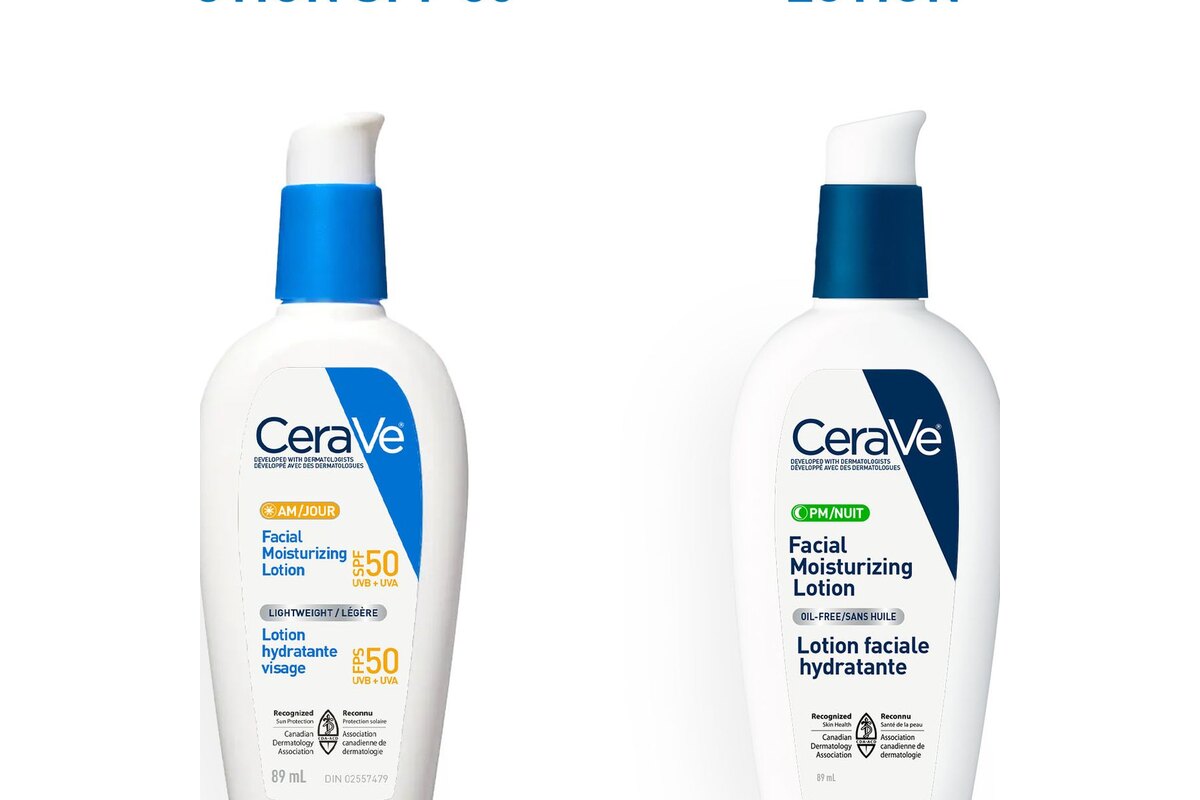
Can I use it in the morning? The brand says yes, but add sunscreen, since it has no SPF.
Is it different from the AM lotion? The AM lotion contains sunscreen. The PM lotion does not and is more focused on overnight hydration.
Is it fragrance-free? Yes, according to the brand.
Will it clog pores? The brand says it is non-comedogenic, but individual results vary.
The Bottom Line
CeraVe PM Facial Moisturizing Lotion is a simple, fragrance-free lotion built on niacinamide, ceramides and hyaluronic acid. Its ingredient list is a good example of how to read a label: look at the first few ingredients, identify the actives, and check for anything you know irritates you. Use it as a lightweight night moisturizer and add sunscreen if you use it by day.