Dr Teal’s Melatonin Foaming Bath Review: A Lavender and Chamomile Soak That Actually Earns Its Spot on the Tub Caddy
I set the bottle on the bamboo caddy across my tub, poured a generous cap under the running water, and watched the foam build faster than I expected. The bottle costs less than ten dollars, yet within a minute the surface was already thick with bubbles. That kind of foam performance is usually the first thing I judge a bath product on, since a flat soak feels like wasted money.
The lavender and chamomile scent filled the bathroom before I even stepped into the water. Once I sank in, my shoulders dropped almost immediately, a mix of the warm soak and that calming scent doing exactly what the label promises. It felt less like a marketing claim and more like a genuine wind down.
Dr Teal's Foaming Bath
Your evening routine is getting an upgrade with Dr Teal's Foaming Bath with Pure Epsom Salt, Sleep Bath with Melatonin & Chamomile Essential Oils. A calming blend of Melatonin, lavender & chamomile essential oils help calm your mind for a good night’s sleep. Pure Epsom Salt helps to ease aches and soreness from muscle pains while refreshing skin's appearance. Pour a generous amount under warm, running water for long-lasting bubbles. Dr Teal’s Foaming Baths are paraben-free, phthalate-free, cruelty-free, and vegan.
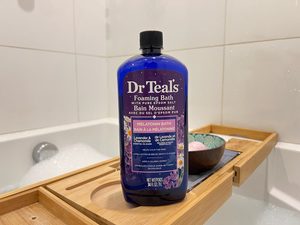
By the time I toweled off, I understood why this bottle keeps showing up on bathroom shelves across the country. It has become a fixture in late night self care routines for a reason that goes beyond the melatonin on the label. This review breaks down what is actually working here, what is mostly marketing, and how it compares to the rest of the Dr Teal’s lineup.
What Makes a Good Sleep-Focused Bubble Bath
Not every bubble bath is built for winding down before bed. A soak meant to help you sleep needs three things working together: a scent profile that is genuinely calming, ingredients that support the skin, and a formula that produces enough foam to feel indulgent. Missing any one of those turns a sleep bath into just another bottle of scented soap.
Epsom salt, or magnesium sulfate, is the ingredient most bath brands lean on for their relaxing claims, since a warm soak in it is often credited with easing tired muscles. Lavender and chamomile are the two scents most consistently associated with calm in aromatherapy research. Melatonin has become the ingredient of the moment for anyone trying to build a wind down ritual without reaching for a pill.
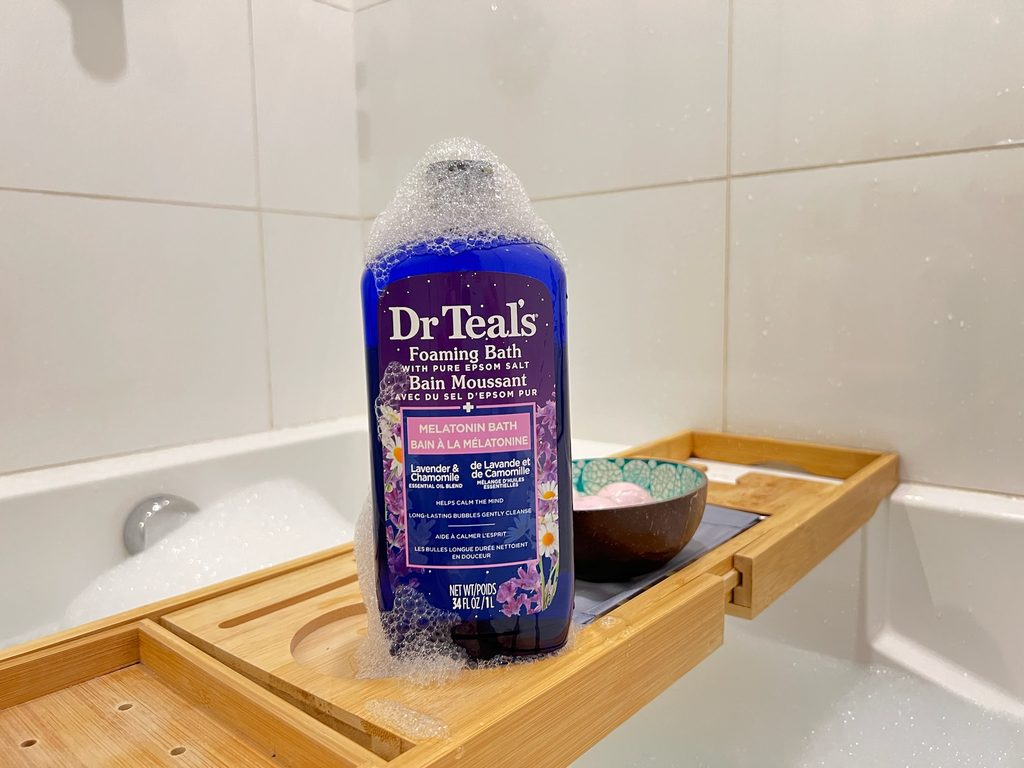
A worthwhile bottle should list these ingredients clearly rather than burying them under a wall of synthetic fragrance names. The scent profile matters as much as the ingredient list, since a bath you do not enjoy smelling is a bath you will not stick with. That combination of honest labeling and genuine scent quality is what separates a bath worth repurchasing from one that sits half used under the sink.
“A bath you don’t enjoy smelling is a bath you won’t stick with, no matter how many relaxing ingredients are listed on the back.”
Dr Teal’s Foaming Bath with Melatonin, Lavender & Chamomile
This is the bottle in question, part of Dr Teal’s broader Epsom salt lineup, a brand that dominates the bubble bath category in the United States. The 34 fluid ounce (1 liter) bottle typically runs between $5.99 and $9.66 depending on the retailer. Kroger and ShopRite price it closer to $5.99, while Walmart and iHerb list it nearer $9.66.
The formula combines magnesium sulfate (Epsom salt), melatonin, lavender oil, and chamomile extract, along with shea butter and vitamin E to keep skin from feeling stripped after a long soak. It is paraben and phthalate free, formulated without animal testing, and suitable for a vegan bathroom cabinet. Directions call for pouring a generous amount under warm running water rather than adding it after the tub is full.
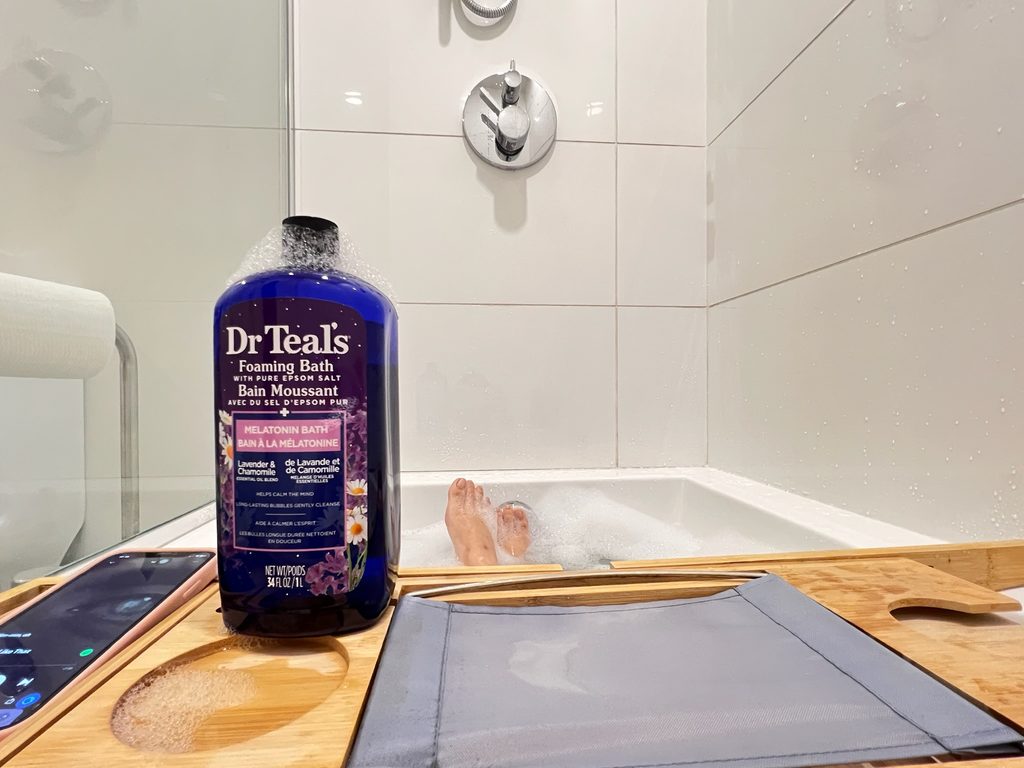
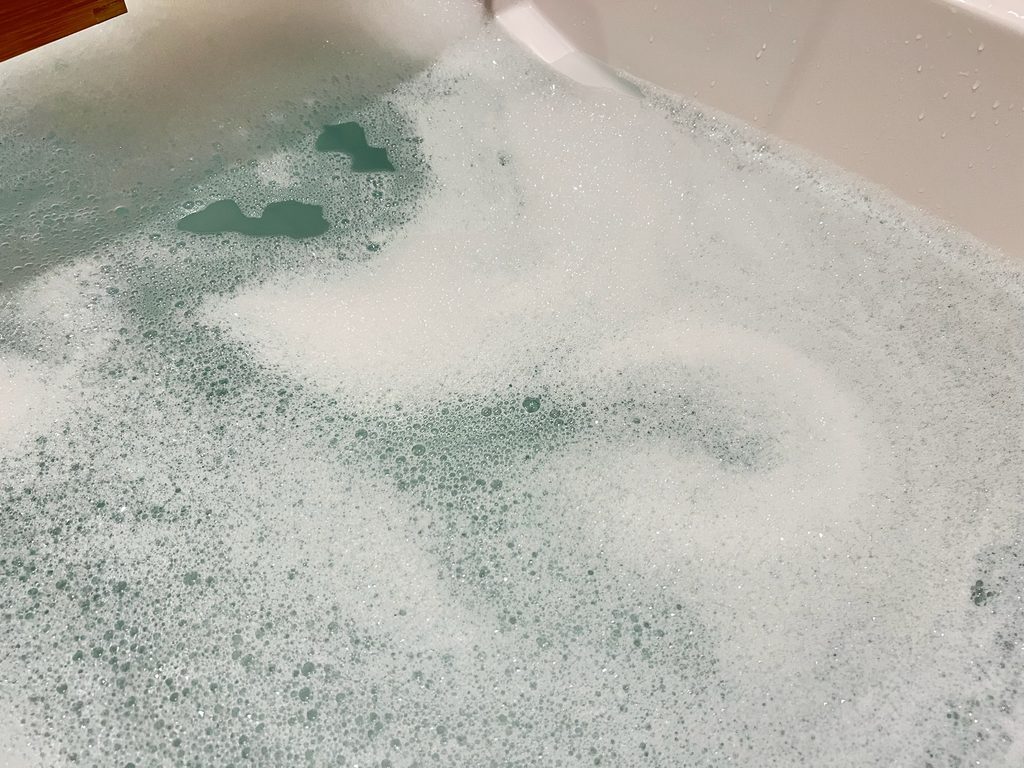
The foam held up well through a fifteen minute soak, longer than several other foaming baths I have tested that go flat within minutes. The scent leaned more toward true lavender than a generic floral blend, with the chamomile softening it rather than competing with it. Filling the cap about halfway produced a full layer of bubbles without leaving any residue on the tub afterward.
“A soak that leaves a ring around the tub is a soak most people quietly stop buying, and this one rinsed clean.”
Other Dr Teal’s Blends Worth Comparing
If the lavender and chamomile combination is not your preference, Dr Teal’s also makes a Relax and Relief blend with eucalyptus and spearmint. It trades the sleepy floral scent for something brighter, which suits a morning or midday soak after a workout better than a bedtime routine. It sits in the same $5.87 to $9.66 price range as the melatonin version.
There is also an Ashwagandha version, aimed more at general stress relief than sleep specifically. It uses the same foaming base and Epsom salt formula, just built around a different adaptogen rather than melatonin. It tends to work better as a daytime soak than as part of a bedtime ritual.
For anyone who prefers a mineral soak without foam, Dr Teal’s sells a dry Epsom salt soak in the identical melatonin, lavender, and chamomile combination. It skips the foaming agents entirely, which some people with sensitive skin find gentler. Since all three options cost about the same, switching between them to match your mood is an inexpensive experiment.
Practical Tips for Getting the Most Out of a Sleep Bath
Water temperature matters more than most people assume. A soak between 100 and 104 degrees Fahrenheit is warm enough to relax muscles without spiking body temperature so high that it works against the natural drop your body needs to fall asleep. A thermometer is not necessary, but water that feels comfortably warm rather than hot is the right target.
Timing the bath one to two hours before bed rather than right before lights out gives your core temperature time to fall. That drop in temperature after a warm bath is actually the signal that helps you drift off, not the heat itself. Soaking too close to bedtime can leave you feeling too warm to fall asleep quickly.
Rinsing off with plain water after a long soak in Epsom salt can help if you have sensitive skin. Sitting in mineral heavy water for too long occasionally leaves a slightly tight feeling once you towel off. Keeping the bathroom door closed while the tub fills also traps the lavender scent in the room, which noticeably strengthens the aromatherapy effect once you get in.
Frequently Asked Questions
How much Dr Teal’s Foaming Bath should I use per soak?
The label recommends a generous pour under running water, and in practice about a third to half of the bottle cap produces a full layer of bubbles for a standard tub. Adding it while the water is running rather than after the tub is full helps the foam build more evenly.
Does the melatonin in a bubble bath actually get absorbed through the skin?
This is worth being honest about. A University of Redlands study comparing melatonin bath products, lotions, and oral pills found that bath products did not raise melatonin levels in the body, while melatonin lotions were absorbed readily through the skin. So the relaxation this bath delivers is more likely coming from the warm water, magnesium, and lavender scent than from the melatonin itself soaking into your bloodstream.
Can I use this bath every night?
Nightly use is fine for most skin types, though anyone with very dry or sensitive skin may want to alternate with a plain warm soak a few nights a week, since frequent contact with fragrance and sulfate-based foaming agents can be drying over time.
Is it safe for sensitive skin?
The formula is paraben and phthalate free, but it does contain sodium lauryl sulfate and fragrance, both common irritants for reactive skin. A patch test on the inner arm before a full bath is a reasonable precaution if you have a history of skin sensitivity.
How is this different from Dr Teal’s Epsom Salt Soak in the same scent?
The foaming bath is a liquid formula designed to bubble, while the Epsom Salt Soak is a dry salt product meant to dissolve without producing foam. Both use the same melatonin, lavender, and chamomile blend, so the choice comes down to whether you want bubbles or a more mineral-forward soak.
Where can I buy it and what does it cost?
It is widely available at Walmart, Target, Ulta, Kroger, ShopRite, and most drugstores, with prices ranging from about $5.87 to $9.66 for the 34 fluid ounce bottle depending on the retailer and whether it’s on promotion.
Final Thoughts
For under ten dollars, this bottle delivers on the two things a sleep focused bubble bath actually needs to get right. The scent genuinely feels calming rather than just pleasant, and the foam lasts through an entire soak instead of going flat. Few products in this price range manage both consistently.
The melatonin claim is more marketing than measurable science based on current research into bath products. The lavender, chamomile, and warm Epsom salt combination still makes for one of the more relaxing evening rituals you can build for a small amount of money. That combination, not the melatonin itself, is doing most of the work.
Dr Teal's Foaming Bath
Your evening routine is getting an upgrade with Dr Teal's Foaming Bath with Pure Epsom Salt, Sleep Bath with Melatonin & Chamomile Essential Oils. A calming blend of Melatonin, lavender & chamomile essential oils help calm your mind for a good night’s sleep. Pure Epsom Salt helps to ease aches and soreness from muscle pains while refreshing skin's appearance. Pour a generous amount under warm, running water for long-lasting bubbles. Dr Teal’s Foaming Baths are paraben-free, phthalate-free, cruelty-free, and vegan.
If you are building out a bathroom shelf of tested picks like this one, it helps to know which products are worth repurchasing before your next drugstore run. Bluverie’s other bath and self care reviews cover several of the products mentioned in this piece in more depth. Checking those out is a reasonable next stop for anyone putting together their own wind down routine.